
Most of the Web we touch in our work and private lives is the world that appears in search engines.
Search on Google and look through the results from the top down. That act itself has become second nature.
This area is called the "surface web" or "clearnet," and it consists only of information indexed by search engines.
However, as we carry out investigations and assessments in the field, we sometimes sense the danger of judging the whole picture by only what is visible.
The information actually circulating on the dark web is varied, too.
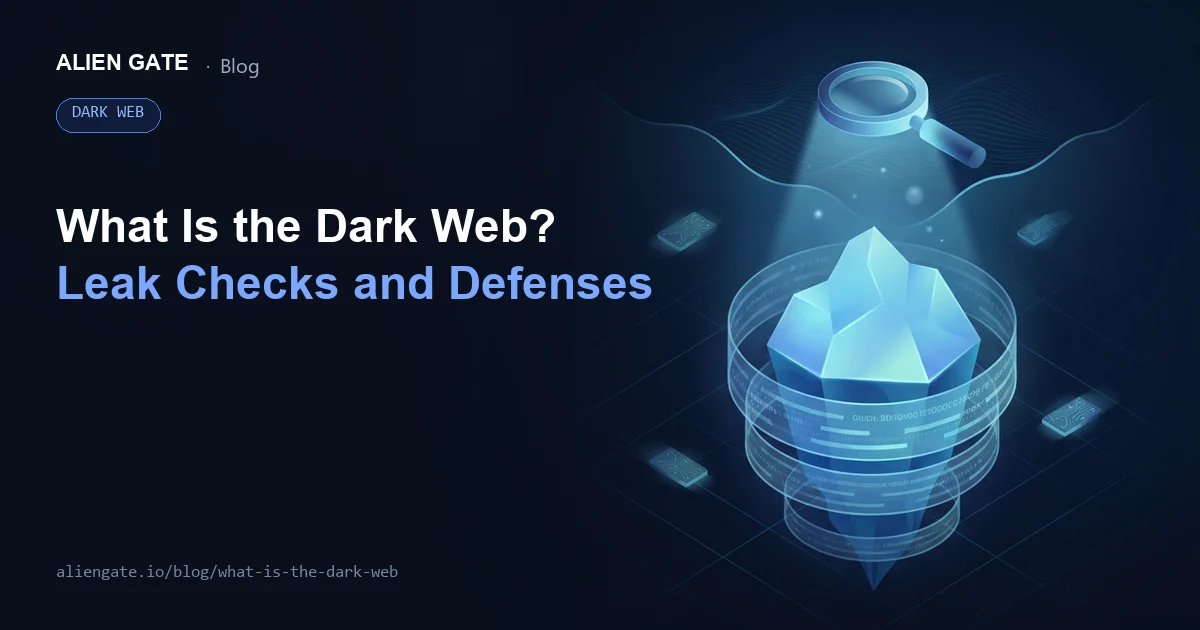
The Web may feel infinitely vast, but seen against the internet as a whole, it is actually only a small part. In reality, the information that exists but never shows up in search far outweighs it in volume.
What Is the Deep Web?
When some people hear the term "deep web," they may picture a special, somewhat dangerous place.
The reality is a little more down to earth. Much of the information we use every day is already part of the deep web; it simply does not appear in search engines.
Rather than "hidden," it is deliberately not made public for business or privacy reasons.
That expression is closer to how it feels in practice.
For example, information such as:
- Internal systems and business databases
- Employee and customer information
- Various backup data
- Online banking and internal portals
- Medical records and archives of research papers
- Social media and email screens after logging in
None of this is anything special.
It is all information that requires a password or authentication and should not be listed in search results.
From a company's point of view, much of the information in the deep web is protected precisely because it is "valuable."
In other words, most of it becomes a problem the moment it ends up exposed.
A deep dive into the mysterious world of the dark web
Why It Is Often Confused With the Darknet
The deep web and the darknet are quite often used as if they meant the same thing.
Even in consultations, we often see the two discussed in a mixed-up way.
In fact, the two overlap but are not the same.
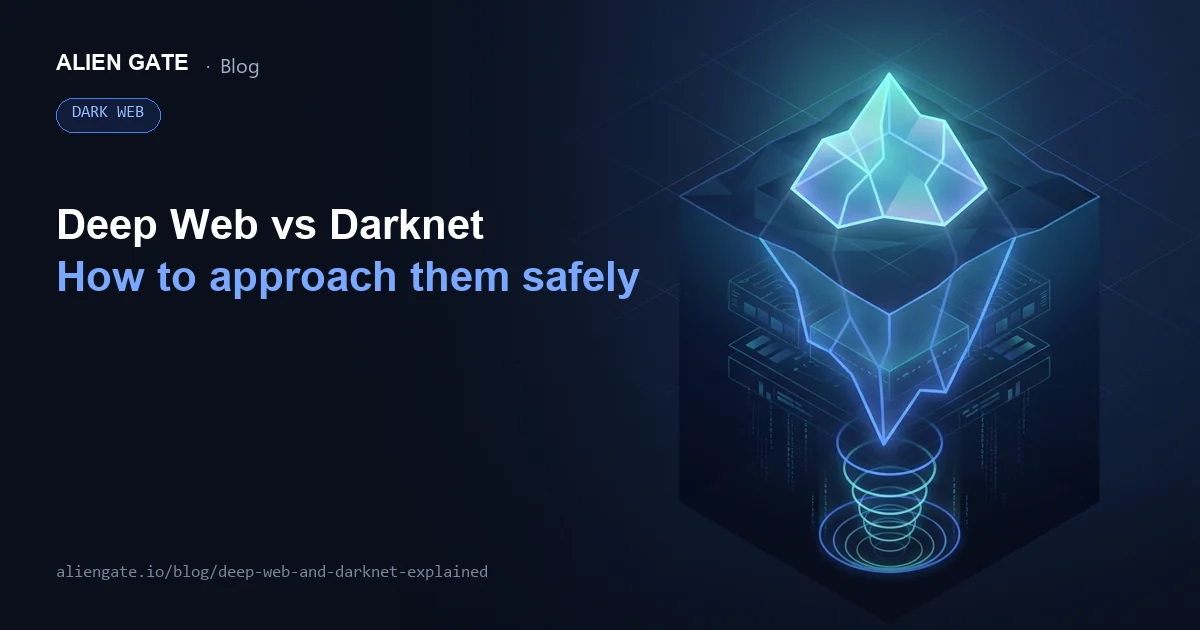
Within the deep web there is an even more limited area designed with strong anonymity as a premise.
This is the part generally called the "darknet."
The darknet has several common characteristics:
- It is accessed via special networks such as Tor
- Its structure makes communication paths and server locations hard to see
- It is sometimes used for black markets and illicit trade
Because of these properties, people tend to have the impression that darknet = dangerous.
But there is one point we want to clarify here.
The darknet is part of the deep web, but the deep web itself is not illegal.
"Information that is meant not to be public," such as business systems and personal data, is all part of the deep web.
When this line is left vague, people can become overly afraid even of things they should be judging calmly.
Honestly, in the field, that misunderstanding quite often leads to delays in taking countermeasures.
Who Uses the Deep Web and the Darknet?

Users are by no means only special kinds of people.
Most people who touch this area are not some "shady character" but are in perfectly ordinary positions.
At the individual level, the purposes are quite practical:
- Checking whether their account information has leaked somewhere
- Confirming whether their personal information is circulating
- Using it when they want to gather information without revealing their real name
Many are closer to "I just want to take a look once, to be safe," and in practice there are not that many cases where illegal activity is intended from the start.
For companies and defenders, on the other hand, the meaning changes somewhat:
- Is our company name or brand mentioned somewhere?
- Is employee or customer information circulating?
- Have internal documents or credentials fallen into third-party hands?
If these checks are made only after an incident occurs, the options are often already limited.
In many cases, the problem is not "the moment of intrusion" but the period during which information keeps being handled without anyone noticing.
That is why defenders try to understand the situation while things are still quiet.
"Getting Into" the Deep Web Is Not Difficult in Itself
It may come as a surprise, but much of the deep web can be accessed without any special tools.
Take internal systems and members-only sites, for example.
In a broad sense, these are already part of the deep web.
They just do not appear in search results, and we touch them every day.
The difference is not "whether you can get in."
It is whether you know where things are and how to look for them.
That alone changes the view dramatically.
However, it is a different story when approaching areas built on anonymity, the so-called darknet.
From here on, an attitude of "let's just take a look" does not work.
Unless you set a clear purpose and design for safety with the risks in mind, the person gathering information may end up being the one handing information over.
Why Anonymity Is Necessary
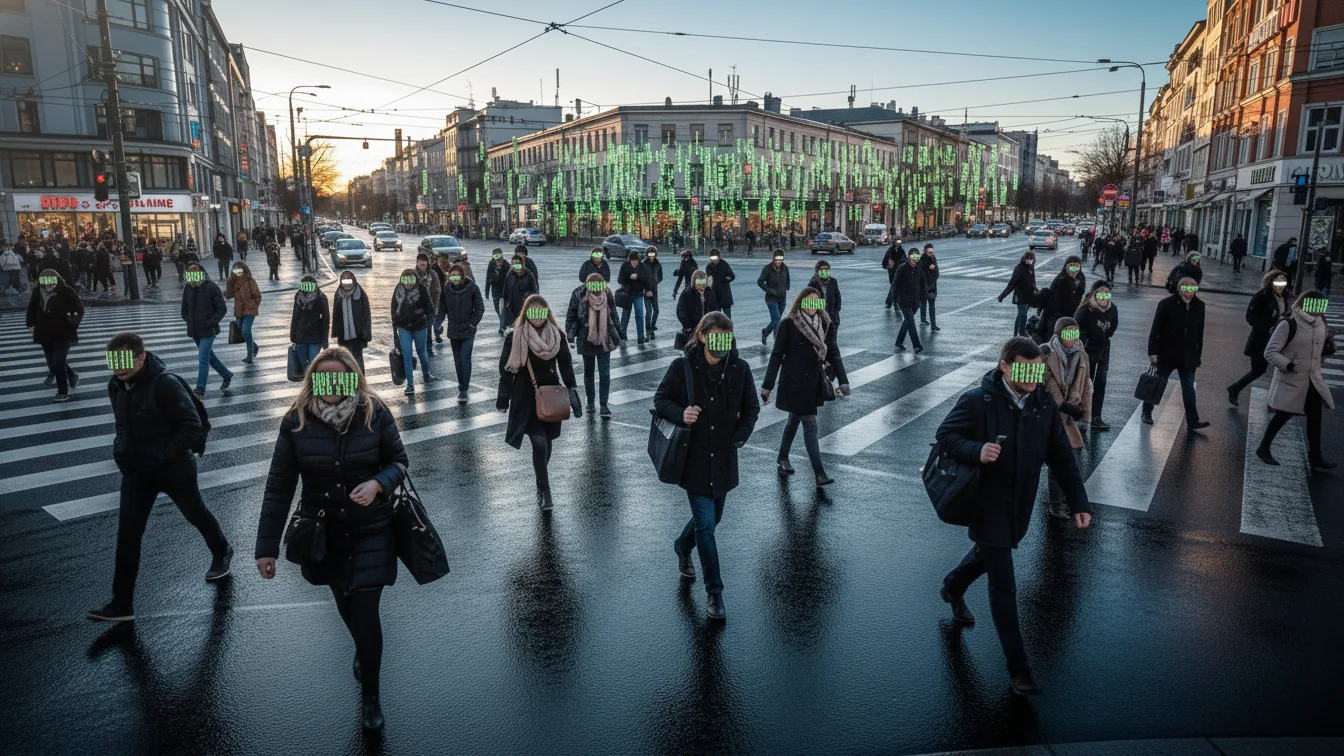
The closer you get to the darknet, the harder communications are to see, but at the same time the risk of being tracked also rises.
Even if you think you are "just researching," misconfiguration or misuse can leave only your own information quietly behind.
We have seen cases like that many times in the field.
For that reason, when dealing with this area, people choose methods built on certain premises from the start:
- Using a VPN so your IP address is not directly exposed
- Going through an anonymity network such as Tor
- Encrypting communications in multiple layers
None of these are anything special.
The goal is very simple:
To create a state where "who is accessing, and from where" cannot easily be linked together.
As long as you are on the information-gathering side, make sure you do not become an unnecessary source of information yourself.
Whether you have this awareness makes a big difference to the nature of the risk.
Leaked Credentials on the Dark Web: What We Found and Why Japanese Companies Are Targeted
Common Misconceptions About Tor and VPNs

Source : The Tor Project, Inc. (CC BY 3.0 US)
A question we often hear in the field is: "Is Tor alone enough?"
Tor is an effective mechanism for increasing anonymity.
By splitting the communication path into multiple stages, it makes the origin hard to trace.
However, the IP addresses of Tor nodes are public, so the very fact that you are using Tor can be visible from outside.
For that reason, in practice, Tor is generally used in combination with a VPN rather than on its own.
Tor over VPN
This method connects to a VPN first and then uses Tor on top of it.
It is easy to handle from the user's side and is a common choice in the field.
- To the ISP, it looks like VPN traffic
- The fact that you are using Tor is hard to see directly
- On the other hand, the trustworthiness of the VPN provider becomes important
This is the configuration chosen when the intent is "to make the use of Tor itself as inconspicuous as possible."
VPN over Tor
This method connects to Tor first and then routes through a VPN.
It makes it harder for the VPN provider to learn your IP address, but the ISP can see Tor traffic.
Which should you choose?
Both have advantages and limitations.
Neither one is absolutely right.
What do you want to protect?
How much risk can you tolerate?
Depending on how you set those premises, the configuration you choose will naturally change.
Freenet and I2P as Alternatives

Source : Freenet & I2P(Public Domain)
Tor is not the only way to secure anonymity.
There are several networks with different purposes and premises.
Freenet
Freenet is a network built around distributed data sharing.
- Data is held in encrypted form, distributed among participants
- Its structure does not depend on any particular server
- It can also form a closed network made up only of people who know each other
It may be easiest to understand as a design that emphasizes "not concentrating data in one place" more than anonymity itself.
I2P
I2P is an anonymity network built on messaging.
- Communications are encrypted in multiple layers, making senders and receivers hard to identify
- Communication itself is structured point-to-point
- It uses its own address scheme (.i2p)
Rather than "browsing" the Web, it is closer in nature to communication between applications that assume anonymity.
Both differ greatly in philosophy from the ordinary Web.
If you touch them without understanding their uses and premises, the difficulty of managing and operating them can end up being all you notice.
Rather than "whether you can use it," it is important to approach them with an awareness of why they were designed.
The Basic Mindset for Approaching Them Safely
Before getting into technology, there is an attitude worth keeping in mind.
When I investigate or check the deep web or the darknet, I always prepare a dedicated test environment.
I never use a work or personal device as is.
Specifically, I spin up a virtual machine (VM) with a disposable OS and destroy the whole environment once the investigation is over.
I never carry an environment over to the next investigation once it has been used.
- Decide in advance what you are touching it to confirm
- Use a test environment (a VM or disposable OS) separated from work and personal devices
- Handle downloaded files only on a dedicated, new USB drive
- Act on the assumption that traces remain, even if you are "just looking"
Even just checking Pastebin or certain forums can leave your information behind in unexpected ways if your environment is not separated.
Whether it is a place mainly for browsing, like Hackerplace, or a site with a structure that moves between the surface Web and the darknet, like sky-fraud.ru, the fact that you "accessed it" cannot be erased.
In this area, every step taken out of curiosity gradually piles up risks that are hard to notice yourself.
That is why, before deciding which tools to use, you decide in what environment, and at what distance, you will touch it.
I feel that is the minimum line that people in prevention and assessment roles should hold.
We have summarized how companies monitor the dark web below.
What We Feel in the Field
In assessment and investigation work, we have many times witnessed situations where "our information is showing up in places we don't remember ever using."
In many cases, the cause is surprisingly simple:
- Credentials that were no longer used had been left in place
- The understanding of what was public did not match reality
- The settings of external services had not been sufficiently reviewed
Each of these is a small oversight on its own.
But when they add up, the result is "it got out at some point without anyone noticing."
We feel the deep web and the darknet are less a threat that suddenly appears and attacks, and more like a hard-to-see mirror that quietly reflects the gaps in our own management.
To understand the structure of the dark web more deeply, we recommend the following article.
Precisely Because Nothing Has Happened Yet
When no problem has come to the surface, checks tend to get put off.
But information keeps flowing without a sound.
It is by no means rare that, by the time you notice, things have already gone past the point where they can be restored.
Just asking yourself once, "How much of our company's information is visible from outside right now?" will naturally change the priority of the measures you should take.
Knowing is not the goal in itself.
It is not about going out to search for something, nor about stoking fear.
Treat it as an opportunity to review, and face it calmly.
As people on the prevention side, we feel that is the most realistic and meaningful first step.
Stay Secure With CyberCrew
CyberCrew's dark web monitoring responds to these threats in real time, helping stop unauthorized access attempts before they escalate into a full-scale breach.