
The digital "shadow" known as the dark web fascinates, frightens and confuses many people, and with good reason.
In this article, we step away from sensational headlines and unfounded speculation to explain, clearly and accessibly, how this hidden part of the internet works, how it affects individuals and organizations, and what you can do to protect yourself.
We focus on fact-based explanations and practical security measures, conveying the essentials without getting needlessly technical.
What Is the Dark Web? A Clear Definition Anyone Can Understand
The dark web is the part of the internet that is deliberately hidden from ordinary search engines and everyday users.
There is the "surface web," which you can browse via search engines, and the "deep web," which includes logged-in areas such as banking sites and email. The dark web lies one layer further down.
It cannot be accessed with a standard browser and requires dedicated software or special network settings. This structure enables strong anonymity, but it also has the side effect of facilitating illegal activity.
It also helps to understand the difference between the deep web and darknets.
How the Dark Web Works: Networks, Anonymity and Access
Tor, I2P and how anonymous communication works
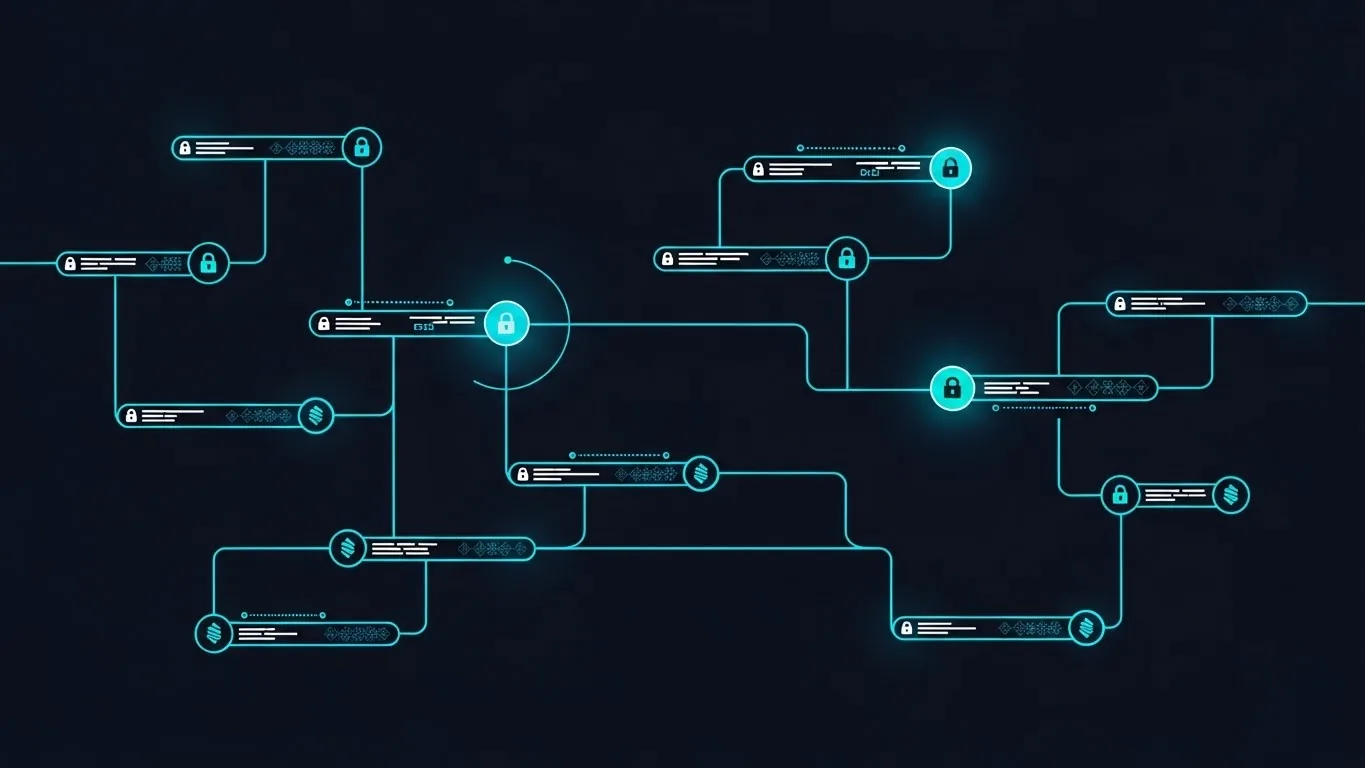
Most users access the "hidden internet" through special networks designed to provide anonymity. In the best-known networks, traffic passes through multiple hops across servers run by volunteers around the world, and data is encrypted at each stage of the connection.
This makes it extremely difficult to identify the sender and the recipient. Other networks use similar multi-layered routing, each with different strengths, such as speed, stability or suitability for long-term use.
Hidden Services and Addressing
Unlike the standard domains used by ordinary websites, many hidden platforms use special encrypted addresses.
These are not discovered by normal search engines, so a high level of anonymity is maintained.
This isolated structure protects activists and whistleblowers who are under surveillance, but it also carries the risk of making illegal markets harder to track and shut down.
Myths and Reality: What Hidden Online Spaces Are Really Like
Myth: Everything on the dark web is illegal.
Reality: In fact, there are many legitimate uses, including secure communication channels for journalists, privacy-focused communities, research and access to information in regions under censorship.
Myth: Simply using the dark web makes you a target.
Reality: The risk depends heavily on "what you do." Simply browsing carries an entirely different level of danger from engaging with markets or downloading unknown files.
Myth: Law enforcement can't touch the dark web.
Reality: In fact, undercover operations, technical tracing and digital forensics have led to the takedown of many large platforms and the arrest of their operators.
How Criminals Operate on the Dark Web: Methods and Trends

Effective digital risk management requires understanding criminals' typical patterns of behavior.
Common illicit activities include markets for buying and selling stolen data, subscription-based malware services and organized fraud communities.
Many illegal platforms have mechanisms also seen on legitimate e-commerce sites, such as reviews, ratings and escrow payments.
Data trading: Exposed login credentials and personal data are bundled and sold, leading to account takeover and identity theft.
Malware & services: Ransomware operators, botnet administrators and phishing service providers share and sell attack tools.
Forums and intelligence sharing: Attack techniques are exchanged, system weaknesses are tested and access to corporate networks is bought and sold.
Why the Dark Web Matters to You and Your Organization
Even if you never interact with the dark web directly, its effects reach far and wide.
Stolen login credentials bought and sold there can be used for unauthorized access to personal accounts, corporate systems, financial services and more.
For organizations of every size, from small businesses to large enterprises, a single data exposure can lead to reputational damage, legal risk and costly recovery.
Detecting Exposure: An Overview of Scanning, Reporting and Monitoring
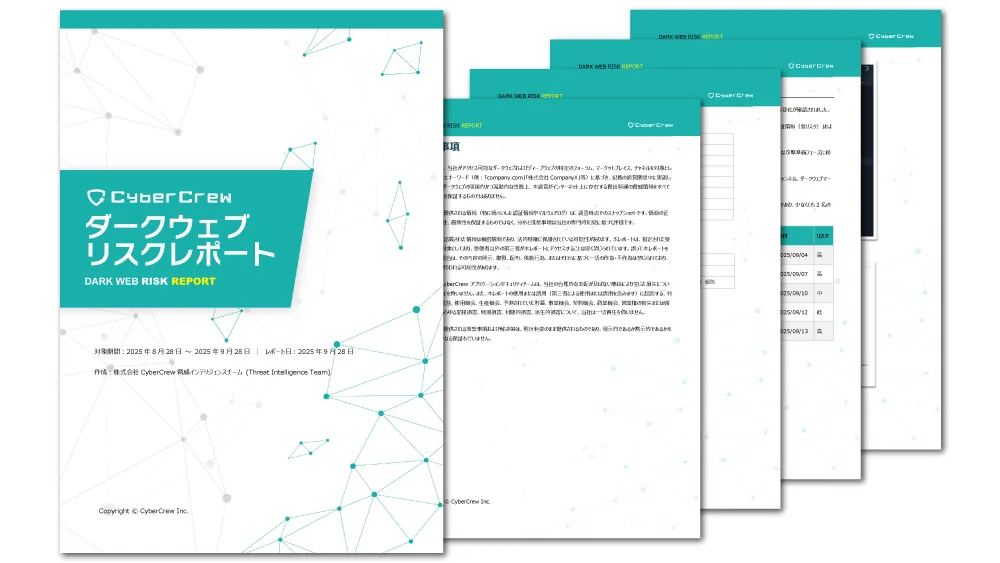
Organizations and individuals can discover data exposure by combining scanning tools, intelligence feeds and manual investigation.
- Dark Web Scan tools crawl attacker marketplaces and paste sites to identify leaked credentials and sensitive data.
- A dark web report summarizes the findings, risk levels and recommended remediation.
- Dark web breach monitoring continuously watches for new leaks tied to specific domains, brands and personal email addresses, and provides alerts.
These capabilities are offered by commercial vendors and open-source projects. The right combination depends on your budget and the depth you need.
Defenses You Can Put in Place Right Away: Steps Anyone Can Take
Below is a practical checklist, in order of priority.
- Use strong, unique passwords and a trusted password manager.
- Enable multi-factor authentication (MFA) on every account that supports it.
- Regularly scan whether your email has been leaked, and change your credentials if you suspect you are affected.
- Keep devices and software up to date so known vulnerabilities cannot be exploited.
- Do not reuse corporate credentials for personal services (or vice versa).
Tools and Tactics: Choosing Monitoring and Response Options
Many organizations take a layered approach.
Monitoring and response options at a glance
| Category | Main features | Free options | Best for |
|---|---|---|---|
| Basic email check | Checks whether an email address appears in publicly leaked data | Some free dark web monitoring tools available | Individuals and small businesses |
| Continuous leak monitoring | 24/7 alerts for brands, domains and email addresses | Usually paid | Enterprises and SOC teams |
| Manual intelligence gathering | Targeted searches, forum monitoring, OSINT collection | Free (but labor-intensive) | Security researchers |
| Forensic investigation | Detailed dark web reports including context and attribution | Paid | Incident response teams |
| Automated remediation | Password resets, enforced MFA, account lockouts | Paid integration options | Large organizations and MSSPs |
Free vs. Paid Solutions: When to Upgrade
- Free tools are handy for spot checks and personal use, but they are limited when it comes to continuous monitoring and providing deep context.
- Paid dark web monitoring tools offer broader visibility, higher-quality context (who leaked the data and where it was found) and integration with automated response.
For small businesses, a good approach is to first get a picture of your risk with free tools, then consider moving to a paid monitoring tool if exposures occur frequently or the data you handle is critical.
Using Open Source Intelligence (OSINT) and Threat Intelligence Effectively
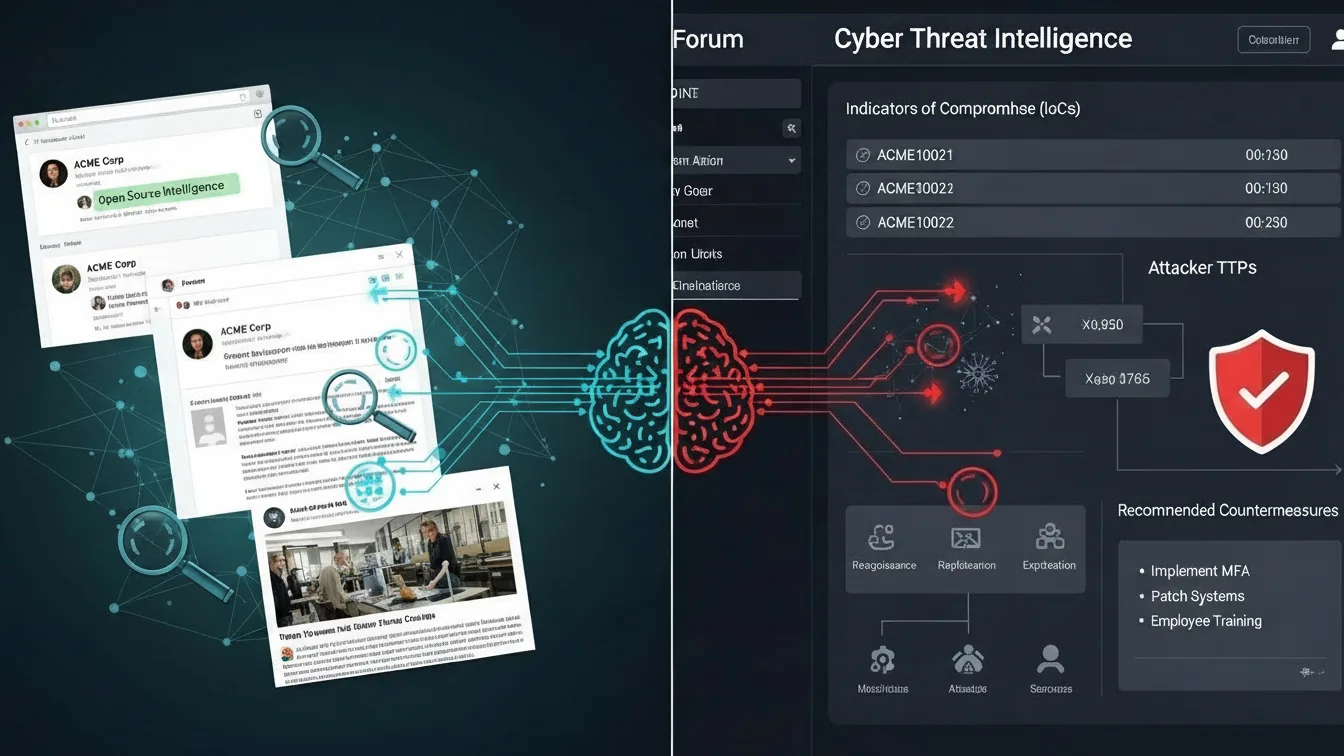
Combining Open Source Intelligence (OSINT) with cyber threat intelligence gives you deeper context.
OSINT helps you check whether your organization or employees are being mentioned on forums, paste sites, social media and elsewhere.
Threat intelligence adds indicators of compromise (IoCs), attackers' TTPs (tactics, techniques and procedures) and recommended countermeasures, reducing false positives and speeding up response.
How to Search the Dark Web Safely and Legally
A dark web search means checking underground marketplaces, discussion forums, leak repositories and the like for any exposure involving your organization's domain names, brand names or employee email addresses.
To do this safely and without legal problems, the following points are important:
- Conduct research in an isolated, secure environment, such as a virtual machine or an air-gapped environment.
- Do not buy, negotiate or post on illegal platforms. Limit yourself to reviewing publicly available information.
- Before starting an investigation, work with your legal department to make sure you comply with domestic and international regulations.
Response Playbook: What to Do When a Data Leak Is Discovered
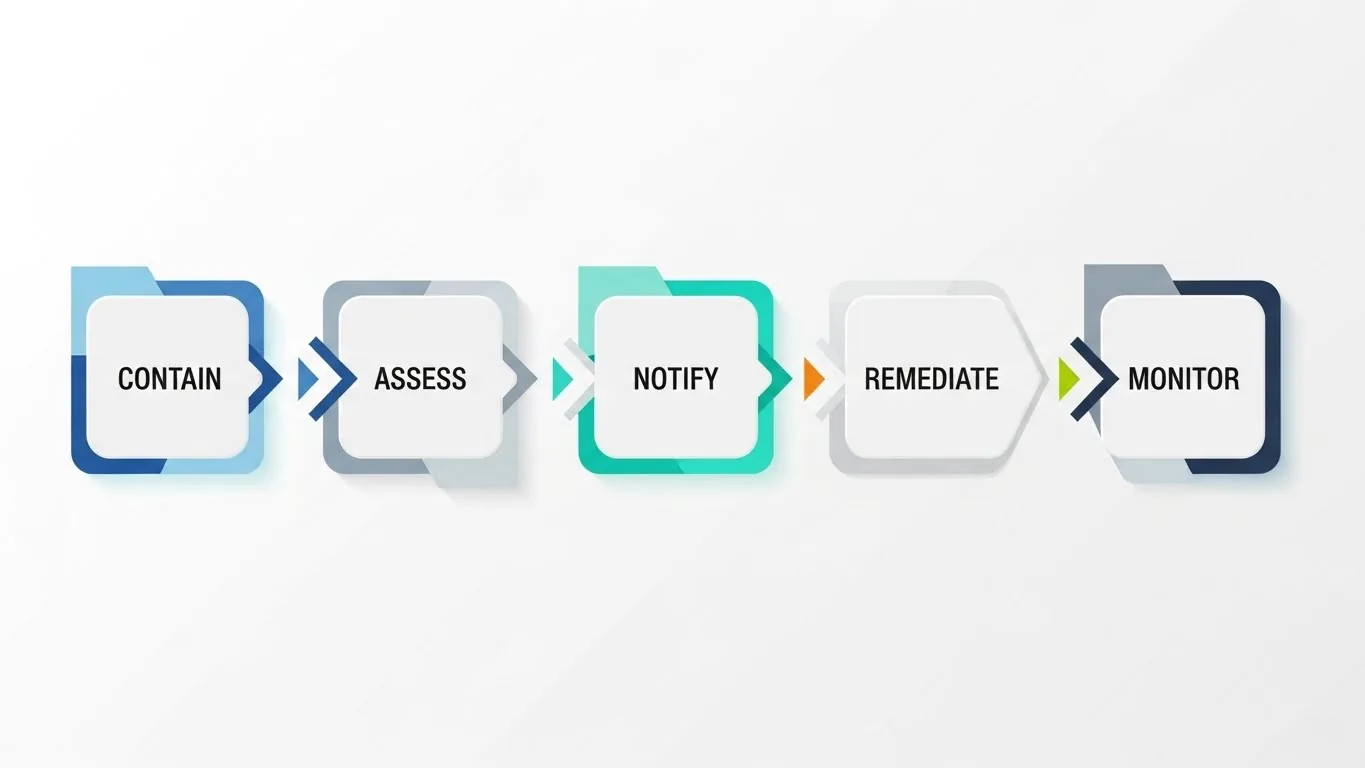
If a scan or a dark web email scan confirms an exposure, take the following steps immediately.
Key risks stemming from the dark web
- Contain: Reset leaked passwords immediately and make multi-factor authentication (MFA) mandatory.
- Assess: Use dark web reports and forensic investigation to determine exactly what was leaked (login credentials, financial data, personal information and so on).
- Notify: Where necessary, promptly notify affected users, partners and regulators.
- Remediate: Fix the exploited vulnerabilities, rotate access keys, strengthen log monitoring and so on.
- Monitor: Expand leak monitoring to cover related domains and email addresses.
High-Urgency Indicators: Signs of a Possible Compromise
If you see the following signs, a compromise may be under way:
- Login attempts from unfamiliar locations or devices.
- A sudden surge in password reset requests across multiple services.
- Highly specific phishing emails that reference internal information.
- Corporate credentials suddenly appearing on public leak sites or underground markets.
If you confirm any of these signs, start an investigation as your top priority.
Privacy, Ethical and Legal Considerations
Investigating hidden networks carries the possibility that researchers will encounter illegal content, as well as legal liability.
Always observe the following:
- Comply with all relevant laws and organizational policies.
- Do not download or store illegal content.
- If findings could trigger legal notification obligations, always coordinate with your legal and compliance departments.
Building an Organizational Program: Roles and Responsibilities
In a mature security program, the following teams work together:
- Security Operations (SOC): Responsible for continuous monitoring and alert triage.
- Incident Response: Carries out containment, investigation and technical recovery.
- Legal & Compliance: Handles regulatory requirements and manages legal notification obligations.
- Communications / PR: Provides accurate information to customers and stakeholders.
- HR & Identity: Keeps employee accounts secure and manages credentials.
How to Make Use of Free Dark Web Monitoring Tools
Free dark web monitoring tools, like other free services and community-run feeds, are very useful as a first step.
They let you quickly check whether an email address appears on known breach lists.
However, they fall short of paid versions in terms of monitoring coverage, speed and in-depth investigation capabilities.
Use them for initial investigation and education, and consider moving to a paid tool if you need continuous monitoring.
Case Studies: What Went Wrong and How It Could Have Been Prevented
Retail breach: A small retailer reused its database credentials, and attackers stole payment information and sold it on an underground market.
Prevention: Separation of credentials, better secrets management and continuous leak monitoring.
Phishing attack: A stolen employee email address was used to send highly targeted phishing messages, and password reset information was stolen.
Prevention: Mandatory MFA, phishing-resistant authentication methods and employee training.
For how corporate information circulates, please see the following article.
What leaked credentials on the dark web really look like, and why corporate information is targeted
Practical Guide: How to Check Whether Your Email Has Been Leaked (Step by Step)

- Use a trusted service to run an email leak check. Start with a free scan to understand your current situation, then switch to paid continuous monitoring as needed.
- If a leak is confirmed, change your password immediately, make sure 2FA (multi-factor authentication) is enabled and review account activity.
- Use a reliable security provider that can run a Dark Web Scan to gather deeper context.
How to Choose the Best Dark Web Leak Monitoring Provider
Points to evaluate:
- Monitoring coverage (paste sites, closed forums, marketplaces and so on)
- Detection speed and alert accuracy
- Depth of context provided and actionable recommendations
- Integration with SIEM and incident response tools
- Data retention policy, reporting features and compliance support
Monitoring Alone Is Not Enough: Effective Proactive Defense
- Deploy phishing-resistant multi-factor authentication.
- Enforce rigorous secrets management (regular key rotation and use of vaults).
- Identity threat detection (monitoring for abnormal authentication patterns).
- Regular testing of backup integrity and verification of disaster recovery procedures.
The Attacker Economy: Pricing, Trust Systems and Market Structure
Underground markets are maturing.
Sellers have rating systems, buyers leave reviews and escrow services guard against fraud, creating mechanisms similar to established e-commerce platforms.
Understanding these structures lets defenders anticipate where and why particular data is traded, and clarifies which areas they should monitor.
Future Trends: How the Dark Web Will Evolve

Expected directions include stronger operational security by attackers, more decentralized market structures and wider use of privacy-focused cryptocurrencies and mixing services.
Defenders will respond with more advanced automation, evolving OSINT tools and security strategies with a stronger emphasis on brand protection.
Quick Reference: Immediate Actions If You Suspect Exposure
- Check for email exposure with a trusted scan.
- Change the passwords of affected accounts and enable MFA.
- Report to your security team and legal department.
- If sensitive data is involved, start an investigation using a dark web report.
- Expand monitoring coverage and document the incident response timeline.
Reference: Three Key Takeaways
Six defensive controls to put into practice:
- Multi-factor authentication (phishing-resistant methods where possible)
- Unique passwords and a password manager
- Least-privilege access and identity management
- Continuous leak monitoring and log alerts
- Patch management and endpoint protection
- Employee training and phishing drills
Common signs of data exposure:
- Receiving password reset notifications you did not request
- Unexpected 2FA requests or login alerts
- Emails that reference internal information, such as internal project names
Situations that call for incident response:
- When personally identifiable information (PII) or financial data has been made public
- When customer data has been listed on an underground market
- When there are signs of active exploitation within the network
Building Long-Term Resilience: Lessons to Learn
Security implications drawn from dark web-related risks.
Security is not a one-time effort.
By repeating layered defense, continuous visibility and fast, effective response, you can reduce the risk of exposure.
True resilience rests on investment in strong people, clear processes and the right technology, and it is sustained by continuously validating them against real-world threats and detections.

Summary
The dark web is a complex realm with two sides: serious risks and legitimate privacy protection.
Correctly understanding how it works, what goes on there and how to respond to exposure is what separates a truly mature security strategy from avoidance driven purely by fear. For more on why companies monitor the dark web, please see the following article.