
These days, the misuse of personal identity can no longer be described only in terms of stolen credit card numbers or hijacked email accounts. Fraud is what tends to make the headlines, but behind it a far more troublesome kind of abuse is quietly spreading.
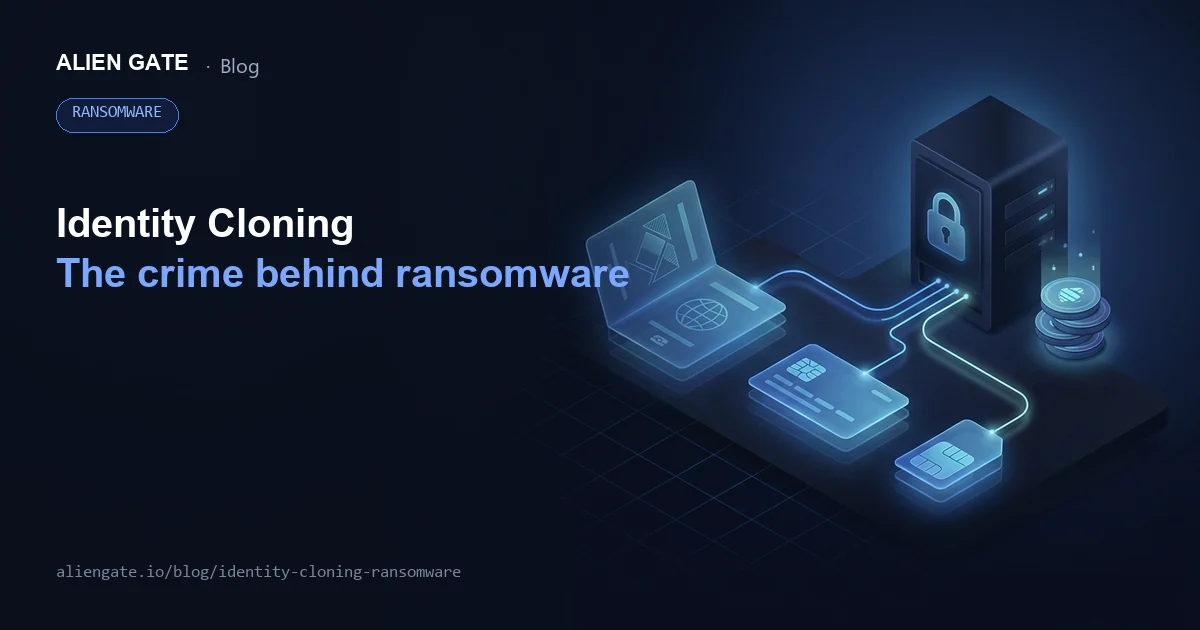
One example is "identity cloning": copying another person's identity and using it as if you were that person. Once a usable set of identity data comes together, such as a passport, driver's license, ID card, phone number, bank details and in some cases even biometric data, a criminal gains a position that attracts little suspicion. From there it goes well beyond simple impersonation. The cloned identity becomes a foothold for all kinds of crime: communications, money transfers, contracts, travel and hiding out.
Build on your understanding of the basics and big picture of ransomware while deepening your understanding of identity cloning.
From the standpoint of IT and security teams, this is a topic that is easy to misjudge if you file it purely under "personal data protection." Identity cloning can act as a middle layer that connects cybercrime with crime in the physical world.
What Does Identity Cloning Make Possible?
One of the first things stolen identity data is used for is obtaining mobile phones and SIM cards. Lines registered under false names or stolen IDs are extremely convenient tools for criminals, because they make it easier to open messaging app accounts, maintain communication networks and run fraudulent accounts without any link to their real names.
There are plenty of financial uses as well. Misused for credit cards, bank accounts, digital wallets or loan applications, a cloned identity can receive and move funds, buy goods and disguise transactions. What makes it so troublesome is that it can produce a "legitimate user" who looks perfectly in order on the surface.
Even more serious is that identity misuse does not stay online. It extends into actions in the physical world: renting property, registering companies, crossing borders and disguising one's identity while on the run. Without any advanced intrusion skills, someone can borrow another person's legal existence as a temporary cloak. That is where the real danger of identity cloning lies.
| Information misused | Typical uses | Why it is troublesome |
|---|---|---|
| ID cards and identity documents | Phone contracts, bank account opening, contract procedures | Easily looks like legitimate use |
| Phone numbers and SIMs | Communication, authentication, account operation | Tends to delay identifying the perpetrator |
| Bank and payment information | Transfers, moving funds, purchases | Obscures the flow of illicit money |
| Biometric data and selfie images | Bypassing eKYC and identity verification | Hard to replace once leaked |
Why It Is Not "Just Fraud"
When people hear about identity theft, financial loss is usually the first thing that comes to mind. That is serious in its own right, but the real danger of identity cloning is that a record of "someone else's actions" builds up under the victim's name.
Unpaid bills, phone numbers you do not recognize, suspicious financial transactions, and in some cases even records as the subject of a criminal investigation become tied to your name without your knowledge. Victims bear not only "the money that was spent" but also "the burden of proving it was not them."
This pattern is less a matter of simple fraudulent use and more a means of disguise for criminals. By borrowing someone's identity, they slow down tracking, divert the trail and make it easier to carry out other crimes. Seen that way, we feel it is closer to the reality to treat identity cloning not as an extension of consumer fraud but as part of criminal infrastructure.
How Does It Connect to Ransomware?
At first glance, ransomware and identity cloning look like different crimes. The former is an attack that holds systems and data hostage; the latter is the fraudulent use of personal identity. In the actual criminal ecosystem, however, the two are not always neatly separated.
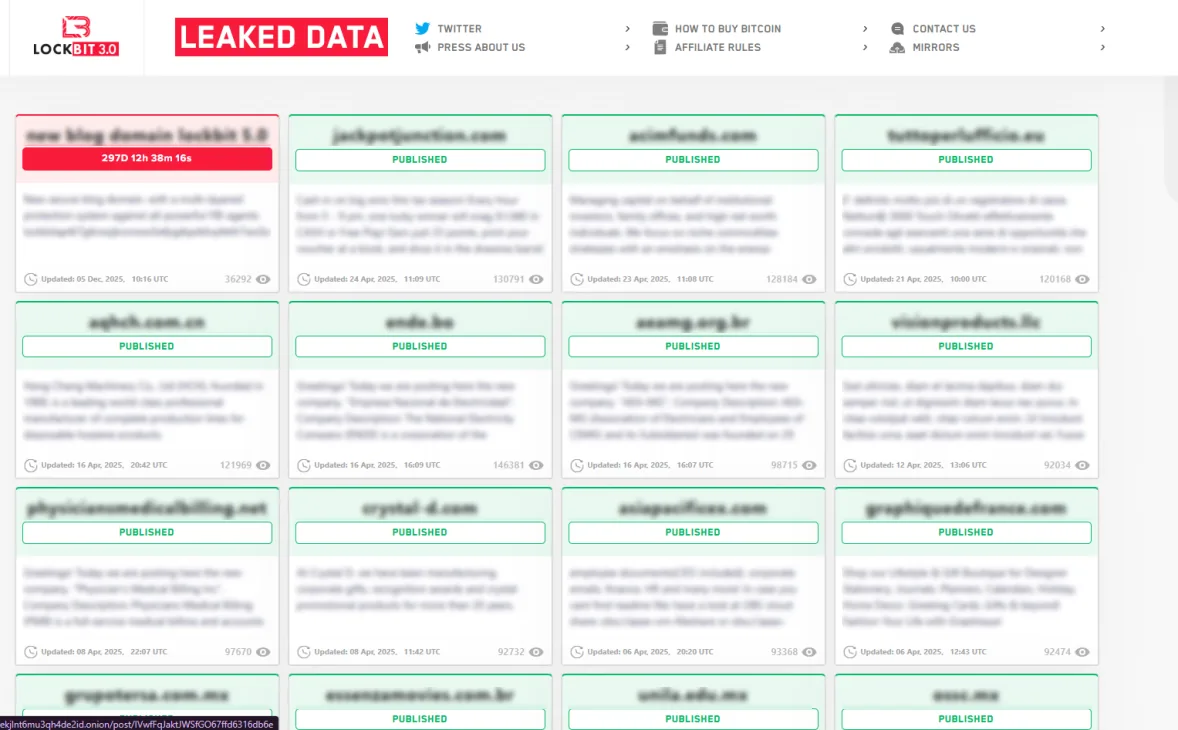
Running ransomware requires a great deal of supporting infrastructure beyond the malware itself: means of communication, accounts to receive funds, routes for moving money, fake personas and anonymity for the operators. Stolen identity data ends up being useful as material to support all of this.
For example, identity cloning may be used in situations such as:
- Registering phones and accounts used in attack operations
- Opening financial channels to receive and move ransoms and illicit funds
- Creating fake employees or fake customers for social engineering
- Reinforcing cross-border money mule networks
- Layering multiple disguises to hide the operators' identities
In other words, even when what you see is a ransomware attack, identity misuse may be functioning behind it as "operational infrastructure." This is why focusing only on anti-malware measures is not enough. You cannot grasp the full picture unless you look not just at the attack code but at the support structure that makes it work.

Not "Just a Hacker Problem"
Another point that is easy to overlook is that the people using these techniques are not necessarily what we would call cybercriminals.
Groups traditionally seen as "physical-world" criminals, such as organized fraud rings, smuggling networks, groups involved in human trafficking and networks that help fugitives, can also use digitized identity data. They do not need to break in themselves; they can buy it on underground markets, obtain it through insider misconduct or reuse leaked data.
What is happening here is a division of labor in crime. Those who steal the information, those who process it, those who sell it and those who use it for real-world contracts and travel are separate, and together they function like a supply chain. Once that structure is in place, separating "cyber" from "real world" no longer means very much.
Why It Stands Out in Asia
This problem is global, but in Asia several conditions overlap that make it especially troublesome.
Many services, including banking, telecom contracts, e-wallets, travel and government procedures, are digitizing rapidly. As convenience increases, identity data is used across a wider range of areas, and the attack surface grows with it.
On top of that, in an environment with active cross-border movement and differences in regulation and enforcement from country to country, information misused in one country can make tracking difficult in another jurisdiction. When the growth of digital finance, ease of travel and the presence of organized crime combine, identity misuse does not end as an isolated case of fraud.
This is not irrelevant to Japanese companies either. Overseas offices, hiring foreign nationals, cross-border remittances, identity verification with contractors, and managing mobile line contracts all create more points of contact than you might think.
What Companies Should Review Goes Beyond "Authentication"
Preventing identity cloning takes more than strict password management. The basics remain important, of course, but you need to review your practices on the assumption that identity data itself is a target.
Treat the information used for identity verification as a critical asset
Not just email addresses and passwords, but also images of ID documents, employee information, phone numbers, financial information and selfie images are all valuable to attackers. Where is it stored, who can access it, and where is it sent? Quite a few companies have never taken an inventory of this.
Assume eKYC and application flows will be bypassed
Work that involves receiving identity documents, registering phone lines or accounts, and processing applications through contractors creates more room for abuse the more convenience is prioritized. You need both entry-point and operational measures: a design that never trusts a single piece of information, anomaly detection and post-application monitoring.
Broaden how you look at incident response
A leak of identity data does not necessarily close as a single data breach. Unless you look at the ripple effects, including subsequent contracts, fraudulent transfers, impersonation contacts and an increase in internal and external inquiries, it is easy to underestimate the actual damage. The impact of a leak should not end with "changing credentials."
Do not stop internal awareness at "don't click the link"
Being wary of suspicious links and apps goes without saying, but sending images of ID documents, requests for selfies and inquiries disguised as identity checks are also points where frontline staff can easily be unsure how to respond. It is important that education on handling personal information does not end as an extension of anti-phishing training.
For infection routes, including identity misuse, see the following article.
Don't Overlook the Foundation Outside the Malware
Ransomware is a highly visible threat. Data gets encrypted, operations stop and a ransom demand arrives. That is exactly why it attracts so much attention.
In reality, though, unglamorous infrastructure that comes before all of that, such as means of communication, identity verification, money movement, disguise and contracts, can be what supports the attack. Identity cloning is one of the elements that makes that infrastructure work. Because it is not a flashy intrusion technique, it tends to be put off, yet it is also an area that readily leads to real damage if left unaddressed.
When you review your security measures, look beyond malware and vulnerabilities and trace, at least once, "what stolen identity data could be used for at our company and our partners." Whether you can imagine that far makes a big difference in the risks you can see. We have compiled our recommended ransomware protection software for preventing identity misuse and infection in the following article.
Best Ransomware Protection Software Compared (2026): A Guide for Individuals and Businesses