
When you observe the dark web for a long time, every so often there is a moment when you feel, "This marks the end of an era."
The takedown of Archetyp Market was exactly one of those moments.
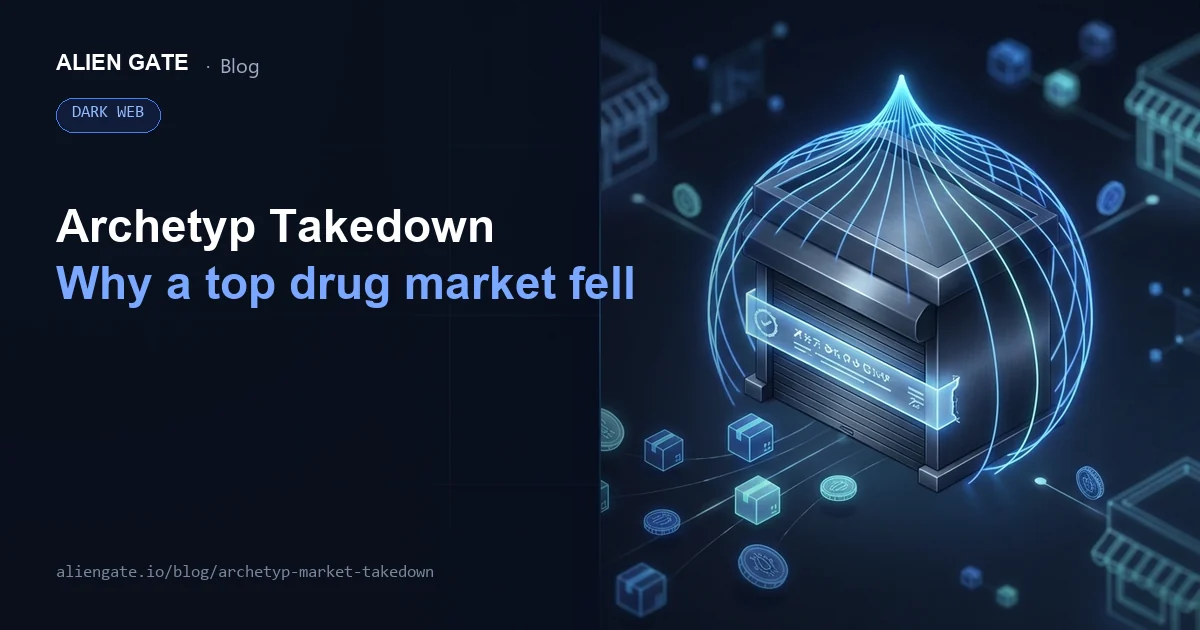
In June 2025, the international operation "Operation Deep Sentinel" completely shut down Archetyp Market, a drug-focused marketplace that had been running on the dark web for years. On the surface it may look like just another news item about "one more illicit site taken down." But from the standpoint of someone who has followed the dark web's internal structure and the movement of people within it, this event carries far more weight than you might imagine.
Archetyp was not just a temporary black market.
It ran stably for more than five years and built a unique position by specializing in one area: the trade in extremely dangerous drugs, including synthetic opioids. Among dark web markets, which are usually short-lived, very few have been "trusted" for such a long time.
That is exactly why this takedown is symbolic.
The infrastructure was seized, the operator was detained, and the market itself disappeared. At the same time, though, the questions "So where will things go next?" and "What will be reorganized?" are already in motion.
It is easy to consume this event as a simple success story.
It is also an important event for understanding how dark web markets work.
But the reality of the dark web is a little more complicated, and more resilient.
In this article, we lay out, from a practitioner's perspective, why Archetyp Market mattered, why it grew so large, and what happens after its closure.
The End of a "Drugs-Only Market" That Lasted More Than Five Years
Archetyp Market had been running continuously for more than five years, making it what you might call a "long-established" dark web market.
Most dark web markets appear and vanish, disappearing within a year. Against that background, the fact that it kept operating for so long was no coincidence. Without a certain level of trust and practical operational skill, no market survives that long.
The takedown was an international and highly determined investigation, led by German authorities in cooperation with Europol and Eurojust.
It is clear that the aim was not simply to shut down one illegal site, but to cut off the people, infrastructure and money flows behind it.
Raids were carried out from June 11 to 13, 2025, simultaneously in five countries: Germany, Spain, the Netherlands, Sweden and Romania.
Dark web markets routinely spread their bases across multiple countries, and this operation was a carefully planned move that took that distributed structure as a given.
The alleged operator, a 30-year-old German man, was arrested in Barcelona, Spain.
Servers were seized in the Netherlands, and the moderators who supported the market's operation and the major vendors who handled large volumes of trades were also targeted.
In addition, assets seized in the investigation amounted to about 7.8 million euros, estimated at roughly 1.3 billion yen.
That figure alone suggests that Archetyp Market was not a small-scale black market but one through which large sums of money moved over many years.
A deep dive into the mysterious world of the dark web
Why Archetyp Was a "Dangerous Presence"
What made Archetyp Market unusual among the many dark web markets was how single-minded it was.
What it did was illegal trade, but its operating policy was remarkably consistent.
An almost abnormal degree of specialization: drugs only
Many dark web markets try to expand the range of goods they handle as much as possible.
In fact, a typical market mixes products such as:
- Drugs
- Weapons
- Stolen data
- Illicit tools
- Forged documents
Archetyp, on the other hand, allowed drugs only.
Weapons and fraud-related products were explicitly prohibited, and the market's direction never changed from start to finish.
As a result, Archetyp developed the following characteristics:
- It attracted only vendors whose goal was drug trafficking
- Synthetic opioids such as fentanyl circulated actively
- It became a market with an extremely high public health risk
Not "a black market that sells everything," but
a place where only dangerous goods gathered, efficiently.
That was Archetyp.
Invite-only and Monero-only: a "chosen space"
Archetyp was not a market that just anyone could easily join.
Registration required an invitation or administrator approval, so users were filtered from the very entrance.
The only payment method was the highly anonymous cryptocurrency Monero (XMR).
On top of that, mechanisms like the following were implemented as standard:
- Escrow to protect transactions
- Encrypted messages using PGP
- Two-factor authentication
None of this is especially advanced technology.
What matters is that it kept running all of this for years without breaking down.
It prioritized "keeping things within a manageable scope" over "growing the user base."
This attitude was a major factor in making Archetyp not a short-lived market but a long-lived market that survived more than five years.
A Sudden Outage, and What Came to Light Afterward
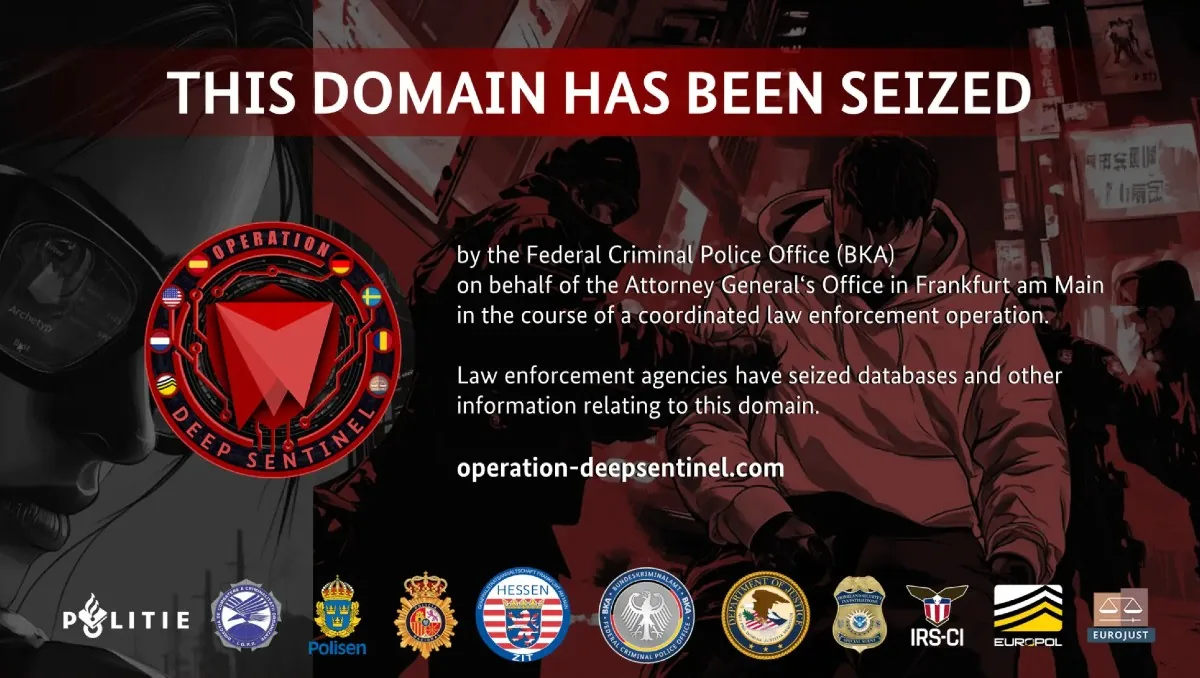
Note: This image is quoted from material published by Europol. © Law enforcement authorities / Operation Deep Sentinel
For several days before the takedown was announced, Archetyp Market had been inaccessible.
There was no special announcement and no explanation; time simply passed with no way to connect.
On the dark web, situations like this are not unusual in themselves.
So users naturally considered a few possibilities:
- Had the operators run off with the funds?
- Or was an investigation quietly under way?
Either way, it was not good news.
The clue for judging the situation was the activity on the official forum, Dread.
Normally, even for an outage or a temporary suspension, a short explanation or status update would be posted.
This time, there was none at all.
Then, on June 14, 2025, Archetyp Market's front page switched to a banner announcing seizure by authorities from multiple countries. At that point, the reason for the outage was officially confirmed.
Looking only at the outcome, it seems like a sudden event, but in hindsight our impression is that it came at the end of a series of small oddities piling up.
Another Role Played by the Dread Forum
Archetyp Market had its own community on Dread, a so-called Subdread.
It had more than 20,000 subscribers, and as we recall, it was on a par with Abacus Market in size at the time.
This Subdread was not just a place for chatting.
Starting with official announcements from the operators, practical exchanges took place there every day, such as:
- Information about market outages and suspensions
- Coordination between vendors and buyers
- Sharing rule changes and notices
The more unstable the market itself became, the more important this space was.
After Archetyp's closure, a PGP-signed final message was posted to the Subdread.
It stated briefly that:
- People involved in the operation had been arrested on June 11
- The market's infrastructure and database had been seized
- Archetyp would not be coming back
This sequence makes something easy to see:
on the dark web, forums tend to outlast the markets themselves.
Even when a service stops, people gather somewhere else and keep sharing information.
Dread has served, not only for Archetyp but for many markets,
as a "meeting place" that keeps functioning even after a collapse.
What Changes After a Takedown, and What Doesn't
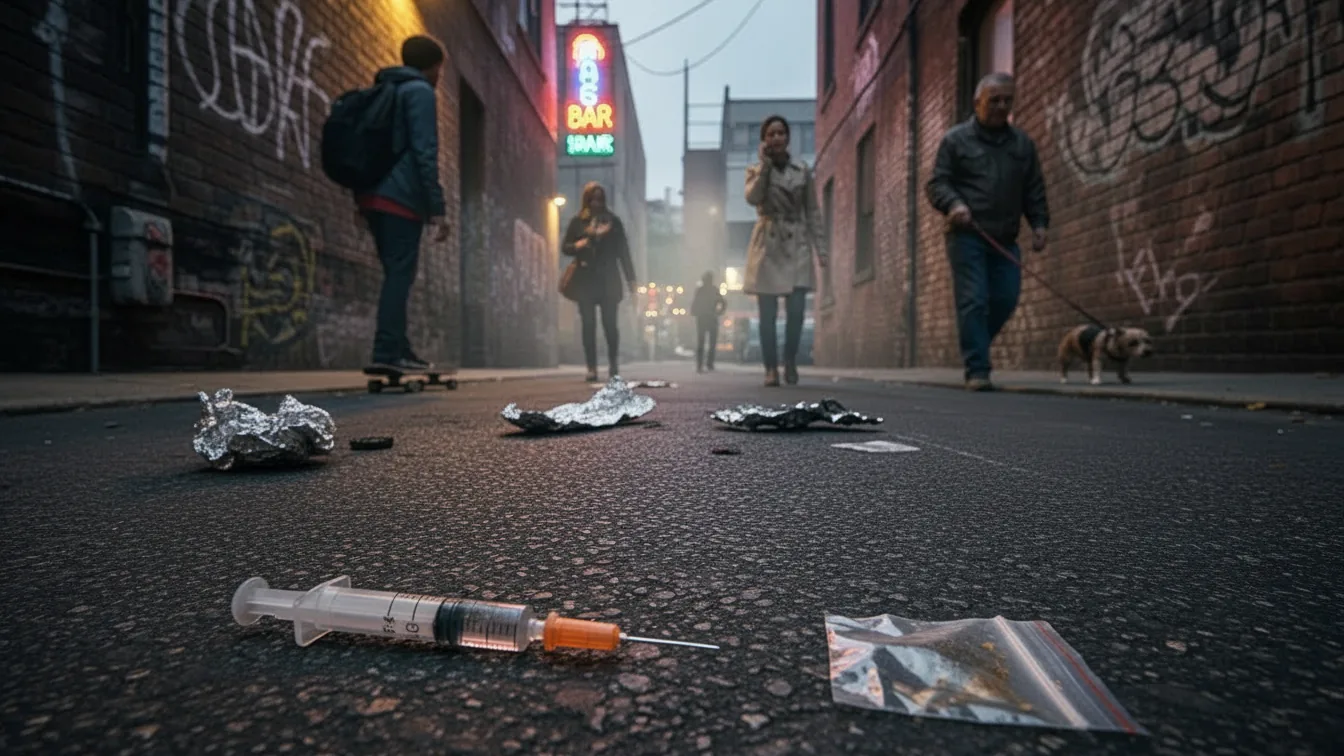
To be honest, the closure of Archetyp Market does not make the demand on the dark web disappear.
Typical changes on the dark web side
Right after a major market is taken down, similar changes happen almost every time:
- Vendors move to other markets
- Phishing and impersonation increase, taking advantage of the confusion
- Trading partners cannot be trusted, and rebuilding trust takes time
In the short term, distribution appears to stall, but in reality this "gap period" is precisely the most unstable time, when trouble is most likely to increase.
Patterns visible from a threat intelligence perspective
From a threat intelligence perspective, the same tendencies repeat here as well:
- A vendor's "name" and reputation outlive the market
- Dread becomes the hub for reorganization
- Infrastructure can be destroyed, but the demand itself remains
This takedown certainly has the effect of temporarily slowing the flow of drugs.
But whether it marks a complete end is, in reality, a more complicated question.
Every time the dark web is broken, it changes shape and starts moving again.
We think it is closest to the reality to see this case as one example within that ongoing cycle.
Thoughts From Someone Who Has Watched Attackers for Years
I study attackers' techniques and behavior while standing on the side of defending companies.
Every time I see news of a takedown like this from that position, I feel the same thing.
Attackers are more resilient than we think.
Other dark web markets are still operating today.
In the world of the dark web, the fall of one market is itself learning material for the next.
What caused the failure, and where the weak points were: those lessons are reliably applied to the next system and the next way of running things.
That is why what really matters in corporate defense is not thinking "It was taken down, so we're safe now."
- In what form will it come back next?
- Where are the next points of attack likely to be?
I believe it is necessary to keep preparing with those perspectives as a premise.
At CyberCrew, we continuously observe the realities of the dark web and the behavior patterns of attackers, and based on the results we propose realistic, meaningful security measures. Not excessive scare tactics, but measures that look squarely at what can actually happen.
Monitoring that keeps tracking changes in the market is also important.
Behind every flashy incident, there is always a next move. Reading it ahead of time:
that, we believe, is our role as white-hat hackers.
Leaked Credentials on the Dark Web: What We Found and Why Japanese Companies Are Targeted
Stay Secure With CyberCrew
CyberCrew's dark web monitoring responds to these threats in real time, helping stop unauthorized access attempts before they escalate into a full-scale breach.